Anti-human CMKLR1 / ChemR23 (Extracellular) Recombinant Monoclonal Antibody (HM0096)
Price range: $230.00 through $720.00
Anti-human CMKLR1 / ChemR23 Recombinant Monoclonal Antibody (HM0096) is a high-affinity recombinant monoclonal antibody generated by phage-display selection from a mouse-derived antibody library, followed by structure-guided affinity optimization. The antibody recognizes an epitope (AA 6–27) located within the N-terminal extracellular flexible region of chemerin-like receptor 1 (CMKLR1, also known as ChemR23). It has been validated by ELISA using a recombinant epitope-Fc fusion antigen and by Western blot detection of endogenous CMKLR1 protein in human cell lysates.
Also known as: hCML1, CMKLR1, CML1, ChemR23, and Chemerin-like receptor 1.
For research use only. Not for diagnostic or therapeutic applications.
Product Information
| Property | Description |
|---|---|
| Product Name | Anti-human CMKLR1 / ChemR23 Recombinant Monoclonal Antibody |
| Antibody ID | HM0096 |
| Target Protein | Chemerin-like receptor 1 |
| Target Protein Short Name | hCML1 |
| UniProt Accession | Q99788-1, Q99788-2 |
| Molecular Weight | Human isoform 1: 42.3 kDa; Human isoform 2: 42.0 kDa |
| Antibody Type | Recombinant monoclonal antibody |
| Host Species | Mouse |
| Recombinant Format | Full-length mouse IgG1 |
| Isotype | Mouse IgG1 |
| Species Reactivity | Human |
| Tested Applications | WB |
| Recommended Dilution for WB | 1:500–1:5000 |
| Antigen | Recombinant epitope-Fc fusion protein |
| Epitope Sequence | EDYNTSISYGDEYPDYLDSIVV |
| Expression System | HEK293 cells |
| Purification | Protein G affinity chromatography |
| Conjugate | Unconjugated |
| Concentration | 0.1 mg/mL |
| Storage Buffer | 0.1 M Tris, 0.05 M Glycine, 0.07 M NaCl, 2 g/L BSA, 50% glycerol, pH 7 |
| Storage Condition | Store at -20°C |
| Research Use | For research use only. Not for diagnostic or therapeutic applications |
Product Background
Chemerin-like receptor 1 (CML1), also known as ChemR23 or CMKLR1, is a G protein-coupled receptor involved in immune cell migration, inflammation, adipogenesis, metabolic regulation, and chemerin-mediated signaling pathways.
CML1 is widely studied in immunology, inflammation research, obesity biology, metabolic disease, cancer biology, chemokine signaling, GPCR biology, and immune cell trafficking.
Antibody Development
HM0096 was generated by phage-display selection using a mouse-derived antibody library. Recombinant epitope-Fc fusion protein containing the CML1 epitope sequence was used as the selection antigen. Following identification of the initial antibody candidate, structure-guided affinity optimization was performed to improve binding affinity and specificity.
The optimized antibody was reconstructed as a full-length mouse IgG1 recombinant antibody and expressed in HEK293 cells.
Binding and specificity were evaluated by:
- ELISA using recombinant epitope-Fc fusion antigen
- Western blot detection of endogenous full-length CML1 protein
Validation Data
ELISA Validation
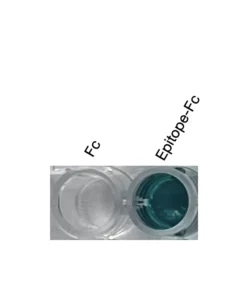
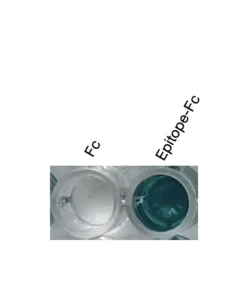
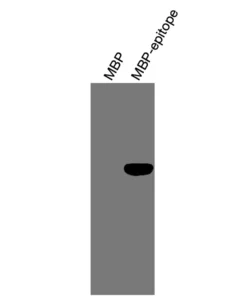
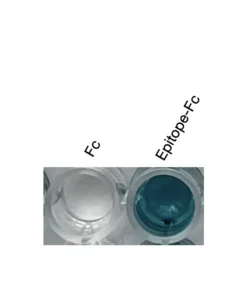
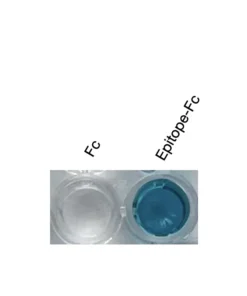
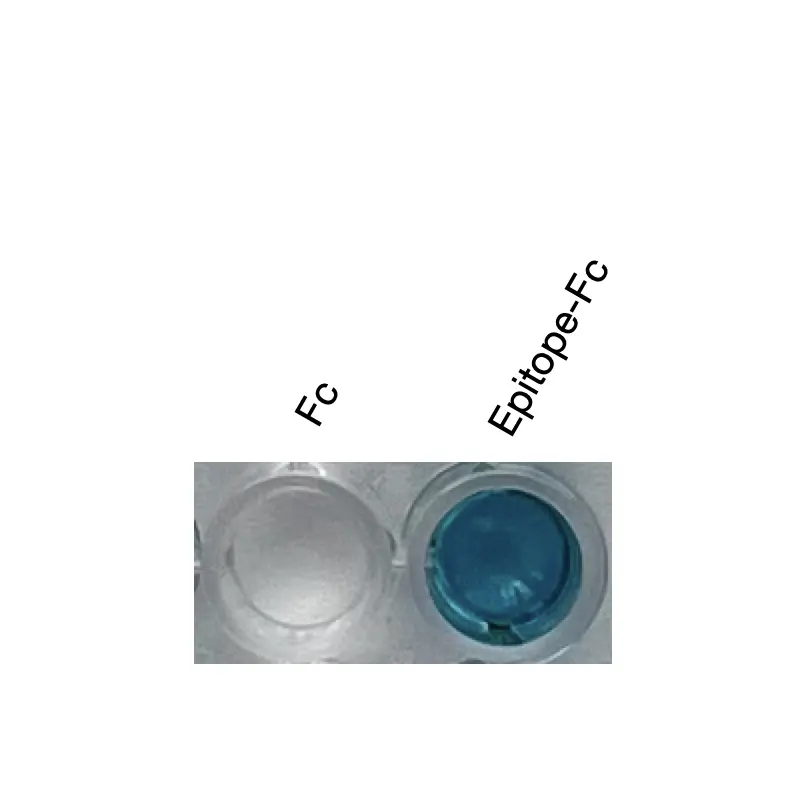
ELISA demonstrated specific binding to recombinant epitope-Fc fusion antigen, while minimal binding was observed against Fc control protein.
Validation conditions:
- Well 1: Fc control protein
- Well 2: Epitope-Fc fusion protein
- Detection substrate: TMB
Note:
ELISA validation confirms binding to the epitope-Fc fusion antigen. Full-length CML1 protein binding in solution has not been tested by ELISA.
Western Blot Validation – Endogenous Full-Length Protein
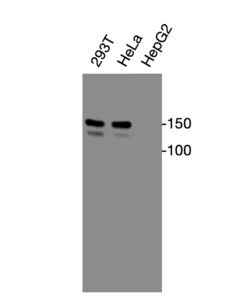
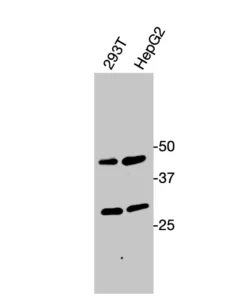
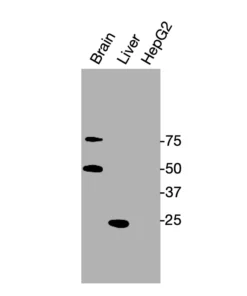
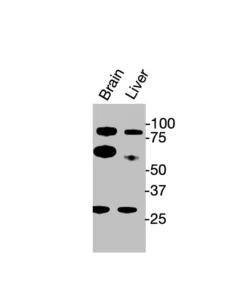
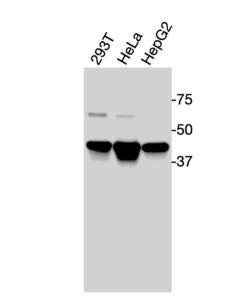
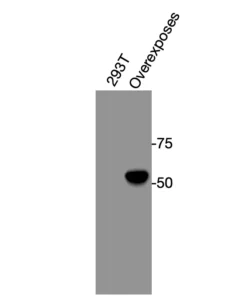
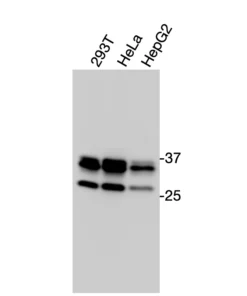
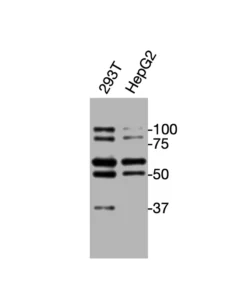
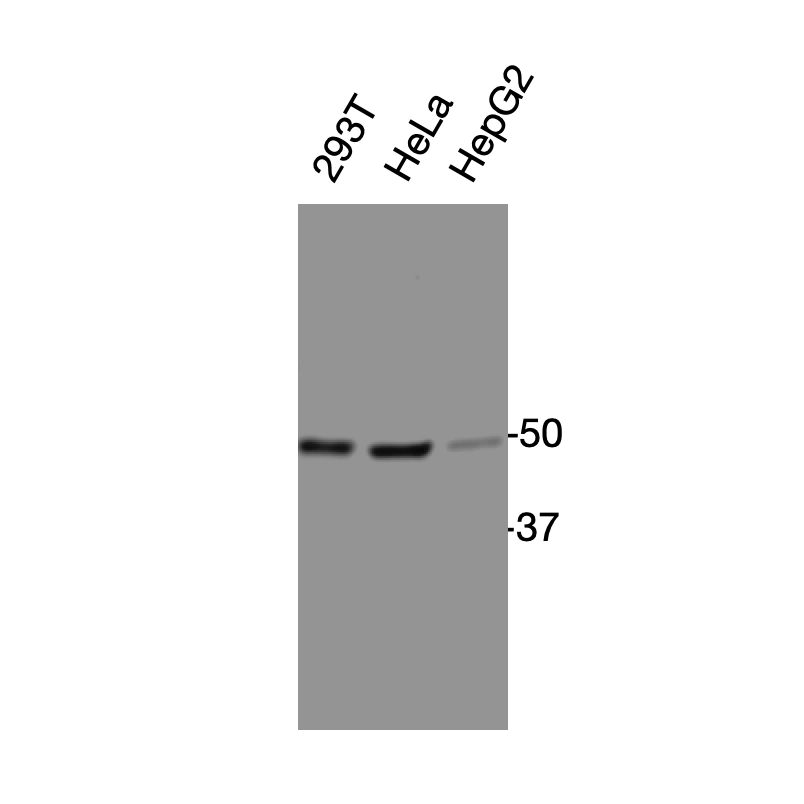
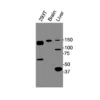
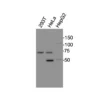
Western blot analysis detected endogenous full-length CML1 protein under reducing conditions.
Validated samples:
- HEK293T cells
- HeLa cells
- HepG2 cells
Observed bands:
- Major bands detected near ~45–50 kDa, consistent with endogenous human CML1 protein
Detection condition:
- Standard reducing Western blot
- HRP-conjugated anti-mouse secondary antibody
| Size | 20 ul, 100 ul |
|---|
Related products