
Research Insights
Why High-Affinity Antibodies Matter in Western Blot Research
May
Introduction
Proteins are the primary functional molecules in living systems and execute most biological processes through interactions with other proteins, nucleic acids, lipids, and small molecules. Because protein abundance, stability, post-translational modifications, and protein complex formation are regulated independently of gene transcription, mRNA expression levels do not always accurately reflect protein abundance or biological activity.
Western blot remains one of the most widely used and reliable methods for directly detecting proteins in biological research. Whether studying signaling pathways, disease mechanisms, gene regulation, membrane receptors, or protein expression, researchers rely on antibodies to identify specific targets within complex biological samples.
However, the quality of a western blot experiment depends heavily on antibody performance. High-affinity recombinant monoclonal antibodies can significantly improve signal detection, reduce background noise, and increase confidence in experimental results. As a result, antibody affinity has become an increasingly important factor in modern protein research.
The Challenges of Protein Detection
Many biologically important proteins are difficult to detect by western blot. Common challenges include:
- Low protein abundance
- Transient signaling events
- Protein degradation during sample preparation
- Alternative splicing and isoform diversity
- Post-translational modifications
- Complex tissue or cell lysates containing thousands of proteins
- Membrane proteins with limited expression levels
These challenges are particularly common when studying G protein-coupled receptors (GPCRs), transcription factors, and signaling proteins.
For example, membrane receptors such as GPR87, GPR25, CCR10, CXCR2, ACKR1, and CMKLR1 are often expressed at relatively low levels and may be difficult to detect using antibodies with insufficient affinity or specificity.
Under these conditions, weak or poorly characterized antibodies may generate low signal intensity, high background, or ambiguous bands that complicate data interpretation and reduce experimental reproducibility.
What Is Antibody Affinity?
Antibody affinity describes the strength of the interaction between an antibody and its target epitope. High-affinity antibodies bind their targets more strongly and remain associated with the target protein during washing and detection steps.
In western blot applications, stronger target binding often results in:
- Increased signal intensity
- Improved sensitivity
- Better signal-to-noise ratio
- Enhanced reproducibility
- Greater confidence in data interpretation
These advantages become particularly important when studying difficult targets such as GPCRs, nuclear receptors, and low-abundance signaling proteins.
Improved Detection of Low-Abundance Proteins
Many biologically important proteins are expressed at relatively low levels. Examples include transcription factors, nuclear receptors, signaling intermediates, and certain membrane proteins.
Nuclear receptors such as LXRα, VDR, ERR1, and RORγ often require highly sensitive antibodies for reliable detection because expression levels may vary substantially between tissues and experimental conditions.
Similarly, proteins such as NPFF2 and PAR1 may be challenging to detect when protein abundance is limited.
High-affinity antibodies improve detection sensitivity by efficiently recognizing target proteins even when only small amounts are present in a sample. This enhanced sensitivity may reduce the amount of sample required and increase the likelihood of detecting biologically meaningful changes in protein expression.
Reduced Background and Improved Specificity
One of the most common challenges in western blot experiments is nonspecific binding. Unwanted interactions can produce additional bands that obscure data interpretation and reduce confidence in experimental results.
Carefully validated high-affinity recombinant monoclonal antibodies help minimize nonspecific cross-reactivity, allowing researchers to distinguish true target signals from background noise.
For proteins with closely related family members, including receptors such as EDNRB and ADRA2A, antibody specificity is particularly important for accurate target identification.
Cleaner blots often require less optimization and support more reliable scientific conclusions.
Detection of Protein Isoforms and Modified Species
Proteins frequently exist in multiple forms within cells. Alternative splicing, phosphorylation, ubiquitination, glycosylation, proteolytic processing, and other biological processes can generate protein species that migrate differently during electrophoresis.
High-affinity antibodies may improve the detection of these species by maintaining strong target recognition even when protein abundance is low or structural changes are present.
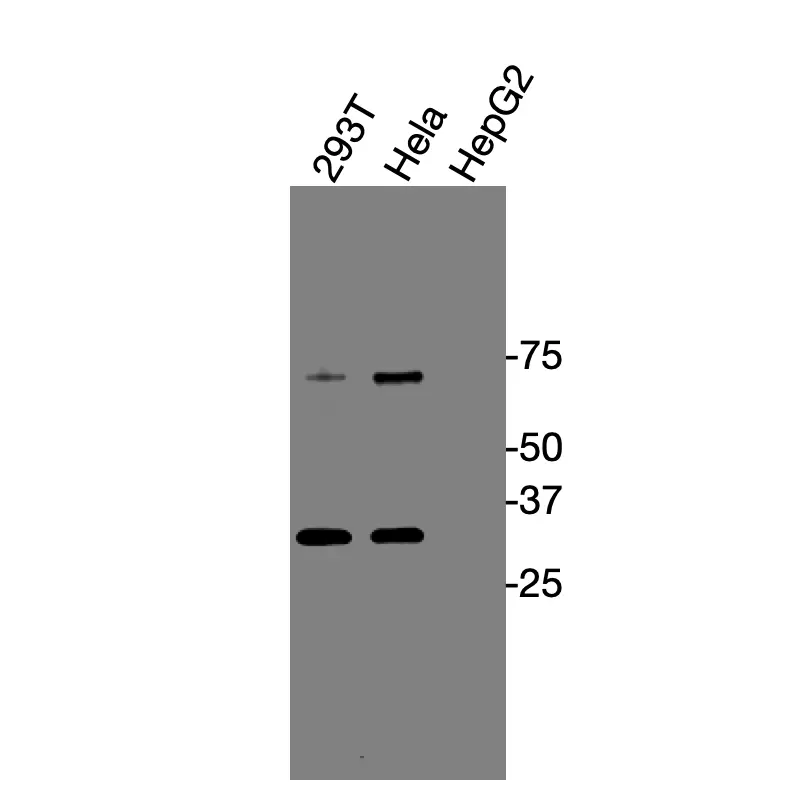
In many cases, additional bands may represent biologically relevant isoforms, post-translationally modified proteins, degradation products, or protein-associated complexes that warrant further investigation.
Rather than being dismissed as experimental artifacts, these bands can provide valuable insights into protein regulation and cellular function.
Reproducibility Through Recombinant Antibody Technology
In addition to affinity, reproducibility is a critical consideration in antibody selection.
Recombinant monoclonal antibodies are sequence-defined reagents that can be reproduced consistently from a known antibody sequence. Unlike traditional antibodies that may exhibit lot-to-lot variation, recombinant antibodies support long-term experimental consistency and improve reproducibility across laboratories and research projects.
When combined with rigorous validation, recombinant antibody technology provides a reliable foundation for accurate protein detection and biological discovery.
Conclusion
Western blot remains one of the most powerful techniques for studying protein expression and regulation, but successful experiments depend heavily on antibody performance.
High-affinity recombinant monoclonal antibodies can improve sensitivity, reduce background, enhance reproducibility, and facilitate the detection of low-abundance or biologically modified protein species. By providing stronger and more reliable target recognition, high-affinity antibodies help researchers generate clearer data, conserve valuable samples, and gain deeper insights into biological processes.
As biological research continues to focus on increasingly challenging targets, the importance of high-affinity and well-validated recombinant antibodies will continue to grow.
Related Products
GPCR and Membrane Protein Antibodies
- Anti-human GPR87 Recombinant Monoclonal Antibody (HM0059)
- Anti-human GPR25 Recombinant Monoclonal Antibody (HM0063)
- Anti-human CCR10 Recombinant Monoclonal Antibody (HM0074)
- Anti-human CXCR2 Recombinant Monoclonal Antibody (HM0076)
- Anti-human ACKR1 Recombinant Monoclonal Antibody (HM0062)
- Anti-human PAR1 Recombinant Monoclonal Antibody (HM0087)
- Anti-human CMKLR1/ChemR23 Recombinant Monoclonal Antibody (HM0096)
- Anti-human EDNRB Recombinant Monoclonal Antibody (HM0081)
- Anti-human NPFF2 Recombinant Monoclonal Antibody (HM0083)
- Anti-mouse/human ADRA2A Recombinant Monoclonal Antibody (XM0069)
Nuclear Receptor Antibodies
- Anti-human LXRα Recombinant Monoclonal Antibody (HM0023)
- Anti-mouse LXRα Recombinant Monoclonal Antibody (MM0004)
- Anti-mouse/human VDR Recombinant Monoclonal Antibody (XM0018)
- Anti-mouse/human ERR1 Recombinant Monoclonal Antibody (XM0022)
- Anti-mouse/human RORγ Recombinant Monoclonal Antibody (XM0026)

The same protein can have different modifications in different tissues, and in the past we often had to look for antibodies that specifically recognized each modified form. A lot of antibodies can only detect one isoform or one form of the protein. Now the company is using antibody screening technology that used to be mainly for therapeutic antibodies to make research antibodies. That really feels like bringing a much higher-level technology into basic research. The only downside is that they still don’t have that many antibodies available yet.