
Research Insights
Animal-Free Antibody Discovery Using Phage Display
May
Introduction
Antibodies are essential tools for modern biological research. They are widely used to study protein expression, signaling pathways, disease mechanisms, cellular functions, and molecular interactions. Traditionally, antibody discovery has relied heavily on animal immunization followed by hybridoma generation or polyclonal serum collection.
While these approaches have contributed significantly to scientific advancement, modern antibody engineering technologies have created new opportunities for antibody discovery. Among these technologies, phage display has emerged as one of the most powerful platforms for generating high-affinity recombinant antibodies entirely in vitro.
By combining large library diversity, high-throughput screening, affinity maturation, and recombinant production, phage display enables the discovery of highly specific antibodies without the need for animal immunization during the discovery process.
What Is Phage Display?
Phage display is an in vitro selection technology that links antibody binding activity to the genetic information encoding the antibody.
In a typical phage display system, antibody fragments are displayed on the surface of bacteriophages while the corresponding antibody genes are carried inside the same phage particle. This physical linkage between genotype and phenotype allows researchers to identify antibody sequences that bind a target of interest.
Large antibody libraries may contain billions to trillions of unique variants, providing access to a level of diversity that is difficult to achieve through conventional immunization approaches.
Through iterative rounds of selection, researchers can enrich antibody populations with desirable binding properties and identify rare clones with exceptional affinity and specificity.
Advantages of Animal-Free Antibody Discovery
No Animal Immunization Required During Discovery
Unlike traditional hybridoma approaches, phage display enables antibody discovery entirely in vitro. Candidate antibodies can be identified directly from antibody libraries without relying on animal immune responses.
Access to Large Antibody Diversity
Large recombinant libraries provide access to billions or even trillions of unique antibody variants. This expanded diversity increases the likelihood of identifying rare antibodies with desirable characteristics.
Rapid Identification of Candidate Antibodies
Because antibody libraries can be screened directly against target antigens, high-quality candidate antibodies can often be identified more rapidly than through conventional immunization-based approaches.
Access to Challenging Targets
Phage display is particularly valuable for proteins that are difficult to target using conventional methods, including highly conserved proteins, poorly immunogenic proteins, membrane proteins, and proteins that exhibit complex structural properties.
High-Affinity Antibody Discovery and Affinity Maturation
One of the major strengths of phage display is the ability to identify rare antibody clones with strong target recognition.
Selection conditions can be progressively adjusted to enrich for antibodies with improved binding characteristics. In addition, affinity maturation strategies allow researchers to further optimize antibody sequences and generate variants with enhanced performance.
This capability is particularly important for challenging targets such as membrane receptors, transcription factors, signaling proteins, and low-abundance proteins that often require highly sensitive detection reagents.
The ability to combine large library screening with affinity maturation provides a powerful route to generating high-affinity recombinant monoclonal antibodies for research applications.
Applications Across Diverse Protein Classes
Phage display-derived recombinant antibodies can be developed against a wide variety of target proteins.
GPCR and Membrane Protein Targets
G protein-coupled receptors remain among the most challenging classes of proteins for antibody development due to their membrane localization and often limited expression levels.
Examples include: GPR87, GPR25, CCR10, CXCR2, ACKR1, PAR1, CMKLR1, EDNRB, NPFF2, ADRA2A.
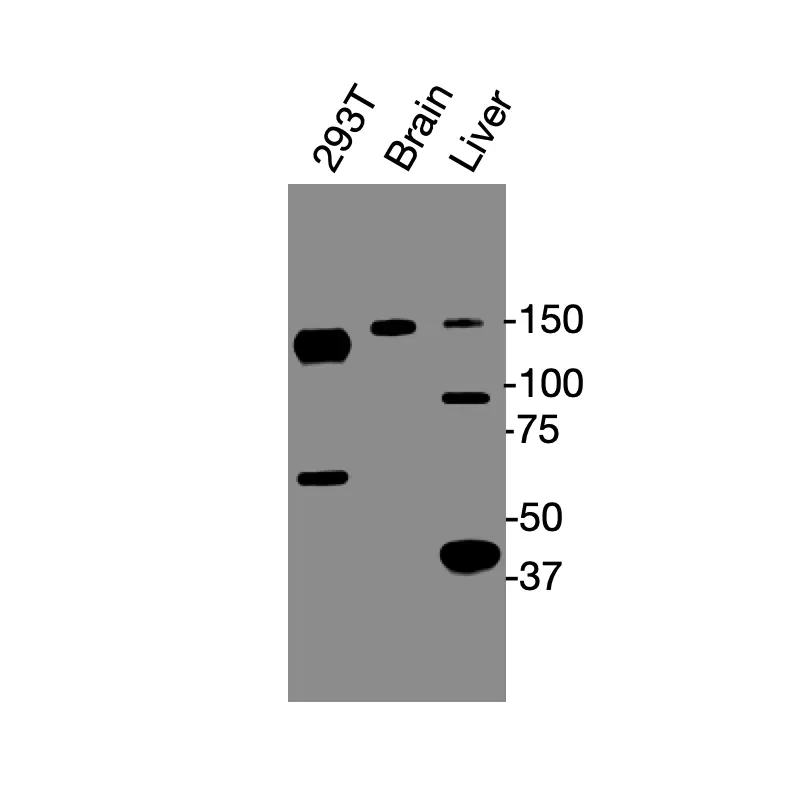
High-affinity recombinant antibodies can improve the detection of these targets in western blot and other research applications.
Nuclear Receptor Targets
Nuclear receptors regulate metabolism, development, inflammation, and gene expression.
Examples include: LXRα, VDR, ERR1, RORγ, RARγ, PPARγ, PPARδ.
Because many nuclear receptors are expressed at relatively low levels, highly specific and high-affinity antibodies are often required for reliable detection.
Signaling and Structural Proteins
Many signaling proteins participate in complex regulatory networks and may exist in multiple modified or interacting forms.
Examples include: Merlin, PDGFRα, SAV1, α-Catenin.
Reliable detection of these proteins often depends on antibody specificity, affinity, and reproducibility.
Recombinant Antibodies and Reproducibility
Antibodies discovered through phage display are sequence-defined recombinant reagents. Once an antibody sequence has been identified, it can be reproduced consistently using recombinant expression systems.
This sequence-defined nature provides several important advantages:
- Improved reproducibility
- Reduced batch-to-batch variation
- Long-term reagent availability
- Renewable antibody production
- Easier molecular engineering
- Consistent experimental performance
These characteristics align closely with the growing emphasis on reproducibility in modern life science research.
The Future of Antibody Discovery
As biological research continues to emphasize reproducibility, transparency, and data quality, animal-free antibody discovery technologies are expected to play an increasingly important role.
Phage display combines large library diversity, high-throughput screening, affinity maturation, and recombinant antibody production into a powerful platform capable of generating well-defined research reagents for modern life science research.
Conclusion
Phage display has transformed antibody discovery by enabling the generation of recombinant antibodies entirely in vitro. By eliminating the need for animal immunization during discovery, expanding antibody diversity, supporting affinity maturation, and facilitating the identification of rare high-affinity binders, phage display provides a powerful foundation for next-generation antibody development.
As researchers seek more reproducible, renewable, and high-performance reagents, animal-free antibody discovery technologies such as phage display are becoming increasingly important tools for scientific innovation.
Related Products
GPCR and Membrane Protein Antibodies
- Anti-human GPR87 Recombinant Monoclonal Antibody (HM0059)
- Anti-human GPR25 Recombinant Monoclonal Antibody (HM0063)
- Anti-human CCR10 Recombinant Monoclonal Antibody (HM0074)
- Anti-human CXCR2 Recombinant Monoclonal Antibody (HM0076)
- Anti-human ACKR1 Recombinant Monoclonal Antibody (HM0062)
- Anti-human PAR1 Recombinant Monoclonal Antibody (HM0087)
- Anti-human CMKLR1 Recombinant Monoclonal Antibody (HM0096)
- Anti-human EDNRB Recombinant Monoclonal Antibody (HM0081)
- Anti-human NPFF2 Recombinant Monoclonal Antibody (HM0083)
- Anti-mouse/human ADRA2A Recombinant Monoclonal Antibody (XM0069)
Nuclear Receptor Antibodies
- Anti-human LXRα Recombinant Monoclonal Antibody (HM0023)
- Anti-mouse LXRα Recombinant Monoclonal Antibody (MM0004)
- Anti-mouse/human VDR Recombinant Monoclonal Antibody (XM0018)
- Anti-mouse/human ERR1 Recombinant Monoclonal Antibody (XM0022)
- Anti-mouse/human RORγ Recombinant Monoclonal Antibody (XM0026)
- Anti-mouse/human RARγ Recombinant Monoclonal Antibody (XM0044)
- Anti-mouse/human PPARγ Recombinant Monoclonal Antibody (XM0049)
- Anti-mouse PPARδ Recombinant Monoclonal Antibody (MM0052)
Signaling and Structural Protein Antibodies
- Anti-mouse/human Merlin Recombinant Monoclonal Antibody (XM0039)
- Anti-mouse/human PDGFRα/CD140a Recombinant Monoclonal Antibody (XM0046)
- Anti-human SAV1 Recombinant Monoclonal Antibody
- Anti-mouse/human α-Catenin Recombinant Monoclonal Antibody (XM0051)

The antibodies work very well and are highly specific, with low background. They can recognize different modified forms of the target proteins and are particularly suitable for immunofluorescence and immunohistochemistry. Some antibodies, such as those against GPR20 and VDR, show very clear zonation patterns, which makes the staining especially informative and easy to interpret.